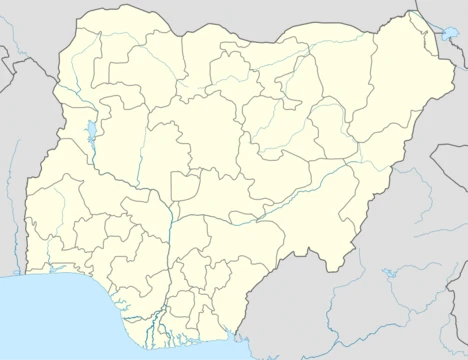
Abia State
A southeastern Nigerian state known for oil and gas production.

via Wikipedia: Abia State · see source
Abia is a state in the Southeastern region of Nigeria, created on 27 August 1991 from Imo State by General Ibrahim Babangida. Its capital is Umuahia and its most populous city is Aba. The state's name is an abbreviation of its four densely populated regions: Aba, Bende, Isuikwuato, and Arochukwu. Abia's slogan is "God's own state." Known for producing crude oil and natural gas, Abia ranks eighth by Human Development Index since 2019. The Igbo people make up 100 percent of the state's population and the official language is Igbo.
- Population composition
- Igbo people make up 100 percent of the state's population
Verified Timeline
Lore & Background
Abia State's history begins as part of the Aro Confederacy until its defeat in the early 1900s by British troops during the Anglo-Aro War. After the war, the area was incorporated into the Southern Nigeria Protectorate of British Nigeria. Following Nigeria's independence in 1960, Abia became part of the Eastern Region until 1967 before the region was split, and it became part of the East Central State. The Eastern Region attempted to secede in the Nigerian Civil War with Abia as part of the secessionist state of Biafra. After the war and the reunification of Nigeria, the East Central State was merged until 1976 when Imo State, including Abia, was formed by Murtala Muhammed. Eastern Imo would later become the old Abia State after a split. In 1996, part of Abia's northeast was removed to form a part of the new Ebonyi State. Abia State was created from Imo State by Ibrahim Babangida on 27 August 1991.
Reader's Guide
Abia State is significant as a major oil- and gas-producing state in Nigeria, with over 100 oil wells and three installed flow stations, contributing over 39% of its GDP. The state produced 36,000 barrels of crude oil per day; as Samuel Okezie Nwogu, Chairman of Abia State Oil Producing Development Area Commission, stated: "Imoturu produces 23,000 barrels per day and Isimili flow station produces over 8,000 barrels of crude oil per day. Then four oil wells in Izaku go to Obigo flow station. About 30 oil wells from my village go to Umuri, and about eight oil wells from Umurie go to Afam." Its industrial centre is Aba, with manufacturing in textiles, pharmaceuticals, soap, plastics, cement, footwear, and cosmetics. Agriculture employs 70% of the state workforce and represents 27% of GDP, with key crops including yams, maize, potatoes, rice, cashews, plantains, taro, and cassava; oil palm is the most important cash crop. The state is predominantly Christian, with Catholic dioceses in Umuahia (established 1958, over 70 parishes) and Aba (established 1990, over 90 parishes), both suffragans of the Archdiocese of Owerri.
Did You Know?
- The name 'Abia' is an abbreviation of the state's four densely populated regions: Aba, Bende, Isuikwuato, and Arochukwu.
- Abia State was created on 27 August 1991 from Imo State by General Ibrahim Babangida.
- The state has over 100 oil wells and three installed flow stations, producing 36,000 barrels of crude oil per day.
- The Catholic Diocese of Umuahia has over 70 parishes, and the Diocese of Aba has over 90 parishes.
Identity, Naming & Administrative Structure
The name "Abia" is not a single place but a composite — a shorthand stitched together from four of the state's most densely inhabited regions: Aba, Bende, Isuikuato, and Arochukwu. This naming convention reflects a community that sees itself as a collection of distinct yet interwoven territories rather than a single monolithic entity. The state's self-proclaimed motto, "God's own state," underscores a deep spiritual identity that permeates daily life. Abia is home to seventeen local government areas, each containing numerous villages, and the entire population is composed entirely of Igbo people, with Igbo serving as the official language. The capital, Umuahia, functions as the administrative seat, while Aba thrives as the commercial heart. The Abia State House of Assembly serves as the legislative body. As one of Nigeria's smallest states, Abia nonetheless carries a distinct cultural and political voice within the southeastern region, maintaining its own identity through its unique naming, its uniform ethnic composition, and its strong religious character.
Geography, Ecology & Climate
Spanning approximately 4,902 square kilometres, Abia sits at a geographic crossroads in southeastern Nigeria. Its borders touch six neighbouring states — Imo and Anambra to the west, Enugu and Ebonyi to the north and northeast, Cross River and Akwa Ibom to the east, and Rivers to the south. The landscape splits into two distinct ecological zones: the southernmost strip falls within the Niger Delta swamp forests, while the remainder of the state is covered by Cross–Niger transition forests. Two major waterways, the Imo and Aba Rivers, trace the western and southern edges before eventually reaching the Atlantic Ocean through Akwa Ibom. Rainfall in the southern portion is substantial, averaging around 2,400 millimetres annually, with the heaviest downpours concentrated between April and October. In Aba, temperatures remain remarkably stable year-round, rarely dipping below 16 °C or climbing past 33 °C, with daily fluctuations typically between 20 and 31 °C. The warm, humid wet season gives way to a scorching dry period, making late November through early February the most comfortable window for outdoor activity.
Historical Formation & Political Evolution
The territory now known as Abia traces its earliest political organisation to the Aro Confederacy, a powerful Igbo trading and religious network that dominated the region until British military forces defeated it in the early 1900s during the Anglo-Aro War. Following that defeat, the area was folded into the Southern Nigeria Protectorate. After independence in 1960, it became part of the Eastern Region, which in 1967 attempted secession as the state of Biafra during the Nigerian Civil War. In the post-war reorganisation, the region was restructured into the East Central State, and in 1976 Murtala Muhammed carved out Imo State, with Abia included within it. The long-awaited separation finally came on 27 August 1991, when General Ibrahim Babangida formally created Abia State from Imo. However, the state's borders were not yet final: in 1996, a portion of its northeastern territory was excised to help form the new state of Ebonyi. This layered history of confederation, colonial absorption, civil war, and repeated administrative redrawing has shaped Abia's complex political identity.
Economy & Religious Landscape
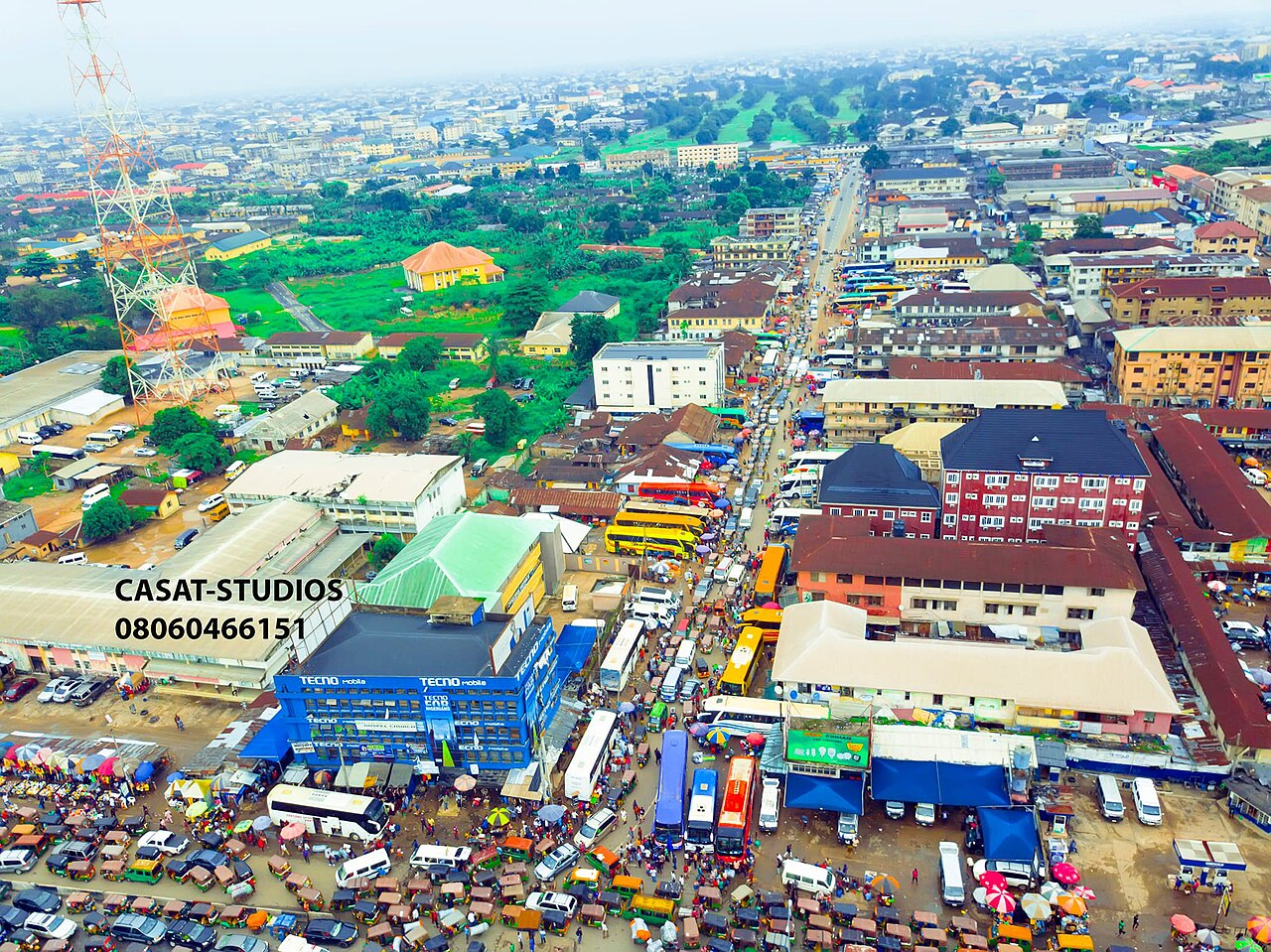
Abia's economy is heavily anchored in the extraction of crude oil and natural gas, a sector that contributes more than 39 percent of the state's gross domestic product. Despite this significant revenue stream, indigenous operators participating through the Marginal Fields Programme have struggled to secure the funding and infrastructure needed to develop their assets fully. Beyond hydrocarbons, the state's commercial life centres on Aba, a bustling trading city that drives much of the region's economic activity. On the spiritual front, Abia is overwhelmingly Christian, with over three million adherents. The Catholic Church maintains a strong presence through two dioceses — Umuahia, established in 1958 with over 70 parishes, and Aba, founded in 1990 with more than 90 parishes — both operating as suffragans under the Archdiocese of Owerri. The Anglican Church of Nigeria's Aba Province encompasses nine dioceses spanning the state, while Pentecostal movements such as the Living Faith Church operate more than 100 branches across Abia, reflecting the vibrant and diverse religious ecosystem.
Gallery


Frequently Asked Questions
What is Abia State?
Abia is a small southeastern Nigerian state carved out of Imo State on 27 August 1991 under General Ibrahim Babangida. It is one of the least expansive states in the country by area.
Where is Abia State located and who lives there?
It sits in the Southeastern region of Nigeria, and its population is overwhelmingly Igbo with a few smaller minority communities.
What are Abia State's capital and largest city?
Umuahia holds the seat of government as the state capital, while Aba is the most populous urban center in the state.
What is Abia State known for economically?
The state is recognized for its crude oil and natural gas output, which anchors much of its economic profile despite its compact size.
How did Abia State come into existence?
General Ibrahim Babangida split it away from Imo State in August 1991, adding it to Nigeria's growing list of states during that period of administrative reorganization.
More in Nigerian States 1-24
Related in Nigerian States
Links follow this subject's own source article.
Elsewhere in the Nigerian States universe
Spotted an error? Know more?
This is a living reference — every entry is fact-audited, and reader corrections feed straight into our audit queue. Suggest an edit · See this site's audit record