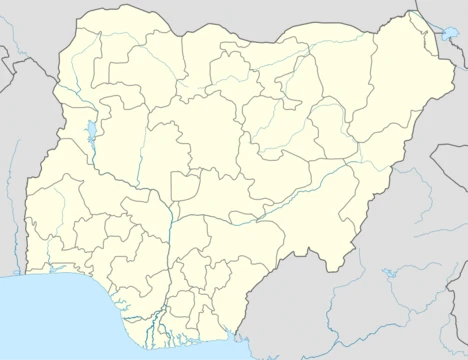
Ekiti State
A Yoruba-majority state formed from Ondo in 1996, noted for high education.

via Wikipedia: Ekiti State · see source
Ekiti State is a state in southwestern Nigeria, bordered to the North by Kwara State for 61 km, to the Northeast by Kogi State for 92 km, to the South and Southeast by Ondo State, and to the West by Osun State for 84 km. Named for the Ekiti people—the Yoruba subgroup that makes up the majority of the state's population—Ekiti State was carved out from a part of Ondo State in 1996 and has its capital as the city of Ado-Ekiti. One of the smallest and most educated states with the highest number of professors in Nigeria, Ekiti is the 31st largest in the area and 30th most populous with an estimated population of nearly 3.5 million as of 2022. Geographically, the state is divided between the Nigerian lowland forests in most of the state and the drier Guinean forest–savanna mosaic in the north.
- Capital
- Ado-Ekiti
- Population (2022 estimate)
- nearly 3.5 million
- Area rank
- 31st largest in Nigeria
- Population rank
- 30th most populous in Nigeria
- Human Development Index
- joint-thirteenth highest in Nigeria
- State tree (adopted March 2022)
- Obeche (Triplochiton scleroxylon)
- Majority religion
- Christian (~90%)
Verified Timeline
Lore & Background
After independence in 1960, the area of now Ekiti was a part of the post-independence Western Region until 1967 when the region was split and the area became part of the Western State. In 1976, the Western State was split and the state's east became Ondo State. Twenty years later, Ondo State's northwest (then termed the Ekiti Zone) was broken off to form Ekiti State. There are two major schools of thought regarding Ekiti's history. One story ties the origin of Ekiti to Ife: the Olofin, one of the sons of Oduduwa, had 16 children, and they journeyed out of Ile-Ife through the Iwo-Eleru (Cave of Ashes) at Ijare and stopped at Igbo-Aka (forest of termites) closer to Ile-Oluji. When they got to a flat land, the Owa-Obokun and Orangun of Ila stayed in present Ijesha and Igbomina land, while the remaining 14 children settled in present-day Ekiti land. They said in their mother's language 'Ile olokiti' (land of hills), later blended to Ekiti. The second school holds that Oduduwa traveled to Ife [Ife Ooyelagbo] where he met people already settled there, including Agbonniregun [Stetillu], Obatala, Orelure, Obameri, Elesije, Obamirin, and Obalejugbe. Descendants of Agbonniregun [Baba Ifa] settled in Ekiti, examples being the Alara and Ajero who are sons of Ifa. Orunmila [Agbonniregun] himself spent a greater part of his life at Ado, leading to the saying 'Ado ni ile Ifa' [Ado is the home of Ifa].
Reader's Guide
Ekiti State is significant as a distinct political entity carved from Ondo State in 1996, representing the Ekiti people, a Yoruba subgroup. Its history includes the pre-colonial Ekiti Confederacy (Ekiti-Parapo), which from 1877 to 1893 fought the Oyo-Ibadan during the Ekiti-Parapo War (also known as Kiriji War) led by Fabunmi Okemesi-Ekiti alongside other Eastern and Western Yoruba groups; the war ended in a British-brokered stalemate before the area was colonized and incorporated into the British Southern Nigeria Protectorate, later merged into British Nigeria in 1914. The state is noted for having the highest number of professors in Nigeria and the joint-thirteenth highest Human Development Index. Economically, it is partially based on agriculture, mainly of yams, rice, cocoa, and cassava crops, with key minor industries of logging and tourism. Geographically, it is divided between Nigerian lowland forests in most of the state and the drier Guinean forest–savanna mosaic in the north, hosting wildlife such as false acraeas, mona monkey, forest buffalo, and grey parrot populations, along with one of the last remaining Nigeria-Cameroon chimpanzee populations with a troop of about 20 chimpanzees in the heavily threatened Ise Forest Reserve. In March 2022, Ekiti became the first state in Nigeria to adopt a state tree as one of its official symbols; on World Forest Day 2022, Governor Kayode Fayemi announced that Obeche (Triplochiton scleroxylon) had been chosen as State Tree. Religiously, the majority of the state's population (~90%) are Christian with smaller Muslim and traditionalist minorities at about 5% and 5%, respectively.
Did You Know?
- Ekiti State has the highest number of professors in Nigeria.
- In March 2022, Ekiti became the first state in Nigeria to adopt a state tree, the Obeche (Triplochiton scleroxylon).
- The Ekiti-Parapo War (Kiriji War) from 1877 to 1893 ended in a British-brokered stalemate.
- Ekiti is home to one of the last remaining Nigeria-Cameroon chimpanzee populations, with a troop of about 20 chimpanzees in the Ise Forest Reserve.
- The saying 'Ado ni ile Ifa' (Ado is the home of Ifa) comes from Orunmila spending a greater part of his life at Ado.
Frequently Asked Questions
Who is Ekiti State?
Ekiti State is a Yoruba-majority state in southwestern Nigeria, carved out of Ondo State in 1996 with Ado-Ekiti as its capital. It takes its name from the Ekiti people, the dominant ethnic group within its borders and the group it is considered the cultural heartland of.
What are Ekiti State's powers/role?
Ekiti is widely recognized as Nigeria's academic heavyweight, producing the highest number of professors in the entire country despite ranking only 31st by area. It also sits at joint-thirteenth in the national Human Development Index, underscoring its outsized role in education and development.
How does Ekiti State's story end?
Because Ekiti is a living, ongoing state rather than a concluded narrative, its story is still unfolding with a 2022 population estimate of nearly 3.5 million. A recent chapter was marked in March 2022 when the Obeche tree (Triplochiton scleroxylon) was officially adopted as the state tree.
Why is Ekiti State important?
Ekiti proves that a small, 30th-ranked state by population can become a national benchmark in higher education and human development. It also serves as the geographic crossroads of the southwest, touching four neighbors—Kwara, Kogi, Ondo, and Osun—while anchoring the identity of the Ekiti Yoruba subgroup.
Where does Ekiti State sit on the map?
Ekiti is nestled in southwestern Nigeria, flanked by Kwara to the north, Kogi to the northeast, Ondo to the south and southeast, and Osun to the west. It is the 31st largest state by area in the country, making it one of the more compact entries in the Nigerian states roster.
More in Nigerian States 1-24
Elsewhere in the Nigerian States universe
Spotted an error? Know more?
This is a living reference — every entry is fact-audited, and reader corrections feed straight into our audit queue. Suggest an edit · See this site's audit record