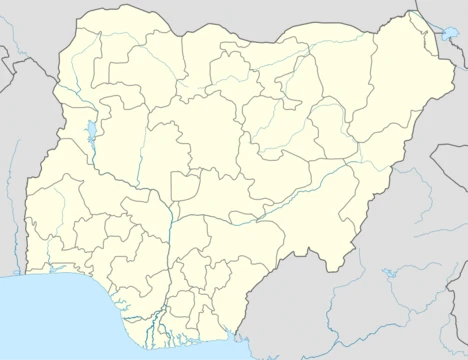
Osun State
State in southwestern Nigeria, named after the River Osun.

via Wikipedia: Osun State · see source
Osun State is a state in southwestern Nigeria, bounded to the east by Ekiti and Ondo states for 84 km and for 78 km respectively, to the north by Kwara State for 73 km, to the south by Ogun State for 84 km and to the west by Oyo State, mostly across the Osun River. Named after the River Osun—a vital river which flows through the state—the state was formed from the southeast of Oyo State on 27 August 1991 and has its capital as the city of Osogbo. Of the 36 states of Nigeria, Osun is the ninth smallest in area and 25th most populous state with an estimated population of about 4.7 million as of 2016. The state is primarily inhabited by the Yoruba people, mainly of the Ibolo, Ifẹ, Igbomina, Ijesha, and Oyo subgroups, and is noted for having the second highest literacy rate in the country.
- created
- 27 August 1991
- capital
- Osogbo
- population
- approximately 4.7 million (as of 2016)
- area_rank
- ninth smallest of 36 states
- major_river
- River Osun
- major_languages
- Yoruba and English
Verified Timeline
Lore & Background
In the pre-colonial period, the area that is now Osun State was split up between various Western Yoruba states with some states being town-based as others were part of larger empires like the Oyo Empire. From 1877 to 1893, Western Yoruba states fought the Kiriji War alongside other Eastern Yoruba groups against Eastern Yoruba groups; the war ended in a British-brokered stalemate before the area was colonized and incorporated into the British Southern Nigeria Protectorate which later merged into British Nigeria in 1914. After independence in 1960, the area of now-Osun was a part of the post-independence Western Region until 1967 when the region was split and the area became part of the Western State. In 1976, the Western State was split and the state's west became Oyo State. Fifteen years later, Oyo State's east was broken off to form Osun State on 27 August 1991. The former Governor Olagunsoye Oyinlola launched and laid the foundation for the groundbreaking of Osun State University with six campuses (Osogbo, Okuku, Ikire, Ejigbo, Ifetedo, and Ipetu-Ijesha) strategically located across the state. Important cultural events include the Ori Oke and Egungun festival in Iragbiji, Olojo in Ife, Iwude Ijesha in Ilesha, Agbeleku Festival in Erin Oke, and the Osun Osogbo festival.
Reader's Guide
Every year, adherents and non-adherents of Osun, one of the Orisa, travel from all over the world to attend the annual Osun-Osogbo festival in August. Visitors include nationals of Brazil, Cuba, Trinidad, Grenada, and other nations in the Americas with a significant Yoruba cultural heritage. Annual traditional festivities and invocations of the Osun goddess are held along the banks of the river bearing her name into which—according to Yoruba Oratory traditions—she transformed. Ọsun-Ọsogbo Grove, the shrine of the annual rites of the deity and an important artistic center, was declared a World Heritage Site in 2005. The former semi-official flag and seal of the state, adopted in 2012, depicted the Ori Olokun, but were officially relinquished in 2023 by act of the Osun State House of Assembly following a 21 January 2017 ruling by the Osun State High Court that the legislation adopting it had been unconstitutional. Economically, Osun State is largely based around agriculture, mainly of cocoa, cassava, millet, cashew, banana, maize, potato and yam crops. Other key industries are services, especially in urban areas, along with artisanal mining and livestock herding. Osun is home to several of Nigeria's most famous landmarks, including the campus of Obafemi Awolowo University, one of Nigeria's pre-eminent institutions of higher learning, located in the ancient town of Ile-Ifẹ. Other important cities and towns include the ancient kingdom-capitals of Ila Orangun, Iragbiji, Ada, Ikirun, Oke-Ila Orangun, Ipetu-Ijesha, Ijebu-Jesa, Erin Oke, Ipetumodu, Ede, Ilobu, Iwo, Ejigbo, Ibokun, Ode-Omu, Otan Ayegbaju, Ifetedo, Esa-Oke, Ilesa, Okuku, Otan-Ile and Igbajo. Tourist attractions include Erin-Ijesha Waterfalls, located in Erin-Ijesha, which features seven floors. Mineral resources in the state include gold, granite, columbite, talc, tantalite, and tourmaline. The major sub-ethnic groups are Ife, Ijesha, Oyo, Ibolo and Igbomina of the Yoruba people. Yoruba and English are the official languages. People of Osun State practice Christianity, Islam and the traditional faith.
Did You Know?
- Osun State is the ninth smallest in area among the 36 states of Nigeria.
- The state was formed from the southeast of Oyo State on 27 August 1991.
- Osun State has the second highest literacy rate in the country.
- The Osun-Osogbo Grove was declared a World Heritage Site in 2005.
- The state's major geographical features include the River Osun, which bisects the interior and forms much of the southwestern border with Oyo State.
Frequently Asked Questions
Who is Osun State?
Osun State is a compact southwestern Nigerian state headquartered in Osogbo, home to roughly 4.7 million people and named for the River Osun that threads through its landscape. It was carved out of the southeastern portion of Oyo State on 27 August 1991.
What are Osun State's powers/role?
The state's signature feature is the River Osun, a major waterway that anchors local ecology and identity. It also carries the distinction of holding the second-highest literacy rate of all 36 Nigerian states.
How did Osun State's story begin?
Osun State entered the map on 27 August 1991 when the southeastern slice of Oyo State was split off into a new administrative unit. Osogbo was designated its capital, and the River Osun gave the newborn state its name.
Why is Osun State important?
As a Yoruba heartland, the state is a cultural home for the Ibolo, Ifẹ, Igbomina, Ijesha, and Oyo subgroups. Despite ranking ninth-smallest by area among Nigeria's 36 states, it packs a dense population and outsized educational influence.
What are Osun State's primary languages?
Yoruba is the dominant everyday language spoken across the state's communities, while English serves as the official medium for government, schooling, and formal administration.
More in Nigerian States 1-24
Related in Nigerian States
Links follow this subject's own source article.
Elsewhere in the Nigerian States universe
Spotted an error? Know more?
This is a living reference — every entry is fact-audited, and reader corrections feed straight into our audit queue. Suggest an edit · See this site's audit record