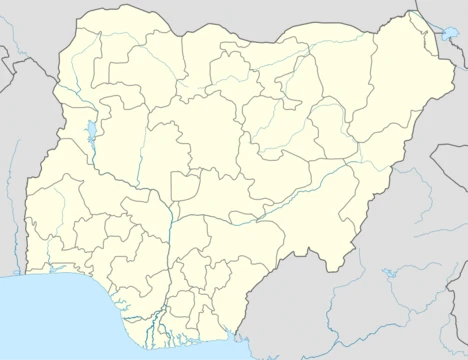
Sokoto State
Northwestern Nigerian state, seat of the Sokoto Caliphate.

via Wikipedia: Sokoto State · see source
Sokoto State is one of the 36 states of Nigeria, located in the extreme northwest of the country. It is bounded by the Republic of the Niger to the north and west for 363 km, and the states of Zamfara to the east, and Kebbi to the south and west, partly across the Ka River. Its capital and largest city is the city of Sokoto, located near the confluence of the Sokoto River and the Rima River. As of 2022 it has an estimated population of more than 6.3 million. Being the seat of the former Sokoto Caliphate, the city is predominantly Muslim and an important seat of Islamic learning in Nigeria. The Sultan who heads the caliphate is effectively the spiritual leader of Nigerian Muslims.
- Capital
- Sokoto
- Population (2022 est.)
- More than 6.3 million
- Area
- 90,000 square kilometres (historical province)
- Major Languages
- Hausa and Fulfulde
- Religion
- Predominantly Sunni Muslim
- Date of Creation
- 1976
- Climate
- Hot, dry Sahel with average temperature 28.3°C
Verified Timeline
Lore & Background
Sokoto State was created in 1976 from the bifurcation of the erstwhile North-Western State into Sokoto and Niger States. Since then, it has been ruled by governors, most ex-military officers, who succeeded each other at short intervals. The region has a longer history: during the reign of the Fulani Empire in the 19th century, Sokoto was an important Fula state, in addition to being a city, of what was then west central Nigeria. From around 1900, with the British take-over, Sokoto became a province of the British protectorate of Nigeria. Not long after, Gando was added as a sub-province. This double province then covered an area of 90,000 square kilometres with an estimated population over 500,000. It included the then Zamfara and Argungu, or Kebbi, kingdoms. In 1967, not long after Nigeria's independence from the British, the region became known as the Northwestern State. This territory was, in 1976, split into Sokoto State and Niger State. Later on, Kebbi State (1991) and Zamfara State (1996) split off from Sokoto State.
Reader's Guide
Sokoto State holds significance as the seat of the former Sokoto Caliphate, making it a key spiritual and Islamic learning center for Nigerian Muslims. Its history includes British colonial administration, which organized the province with a British resident of the first class at Sokoto and assistant residents at other centres, British courts of justice, and detachments of civil police. The country was assessed under a new system for taxes and opened for trade. A 1906 rising attributed to religious fanaticism occurred near Sokoto, in which three white officers lost their lives. The emir heartily repudiated the leader, who claimed to be a Mahdi inspired to drive the white man out. A British force marched against the rebels, who were overthrown with great loss in March 1906; the leader was condemned to death in the emir's court and executed in the market place of Sokoto. The state's economy is dominated by agriculture, employing a majority percent of the state's working population, yet it is one of the poorest in Nigeria with one of the highest incidences of extreme poverty (around 80% of the population) according to World Bank data from 2018. The dry Sahel climate, with an annual average temperature of 28.3 °C, and reliance on the floodplains of the Sokoto-Rima river system for crops shape its geography and livelihoods.
Did You Know?
- Sokoto State is bounded by the Republic of the Niger to the north and west for 363 km.
- The name Sokoto is of Arabic origin, representing suk, 'market'.
- A 1906 rising near Sokoto attributed to religious fanaticism resulted in the death of three white officers; the leader was executed in the market place of Sokoto.
- Over 80% of people living in the state practice agriculture.
- The state has one of the highest incidences of extreme poverty in Nigeria, around 80% of the population according to World Bank data from 2018.
Frequently Asked Questions
Who is Sokoto State?
Sokoto State is a northwestern Nigerian state carved out in 1976, named after its capital city where the Sokoto and Rima rivers converge. It is home to more than 6.3 million residents who primarily speak Hausa and Fulfulde.
What role does Sokoto State play in Nigeria?
As the historic seat of the Sokoto Caliphate, the state functions as the country's leading center of Islamic scholarship, and its Sultan is widely regarded as the spiritual head of Nigeria's Muslim community.
Where exactly is Sokoto State located on the map?
It occupies the extreme northwest tip of Nigeria, sharing its northern and western borders with the Republic of the Niger, while Zamfara and Kebbi states border it to the south and east.
Why is Sokoto State considered so important?
The region was the political and religious heart of the Sokoto Caliphate, one of West Africa's largest pre-colonial empires, and that legacy still defines the state as a major hub of Islamic learning and tradition.
How big is Sokoto State and how many people live there?
Spanning roughly 90,000 square kilometres, the state had an estimated population exceeding 6.3 million as of 2022, making it a densely populated area in the northwest.
More in Nigerian States 1-24
Elsewhere in the Nigerian States universe
Spotted an error? Know more?
This is a living reference — every entry is fact-audited, and reader corrections feed straight into our audit queue. Suggest an edit · See this site's audit record